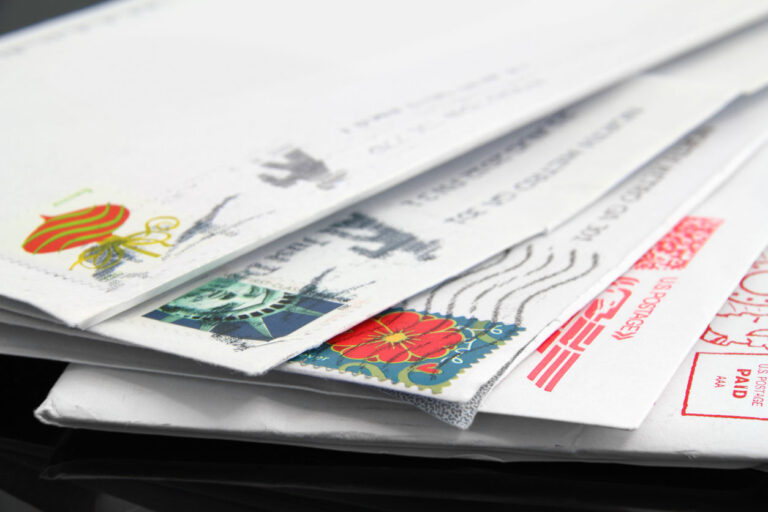
I recently learned about a significant change from the USPS, effective Wednesday, December 24, 2025. It confirms that now, postmarks may be applied later than the day of actual mailing. This means some donors may not be able to substantiate year-end gifts to count for the year they intended, even if mailed prior to year end, unless they take special precautions.
What’s Changing?
For as long as most of us have been in this field, a postmark has been deemed a “perfectly reliable indicator” of a gift date because it proved exactly when a donor relinquished control.
However, the USPS is shifting its operations. Machine postmarks are now being made at regional processing centers rather than local post offices or drop-off points. Because of this, the USPS now states that a machine-made postmark is no longer a perfectly reliable indicator of the actual mailing date.
The “New Year’s Eve” Problem
In the past, if a donor dropped an envelope in a blue box on December 31, it was usually postmarked that day. Under the new rule, that same envelope might sit in a local collection bin, be trucked to a regional center, and not receive a machine postmark until January 2 or 3.
The result: Without other proof of mailing, that gift will be documented as a 2026 gift, even if the donor mailed it in 2025.
How Donors Can Protect Their Deductions
If a donor wants to ensure their gift counts for a specific date (like year-end), the “safe” way to mail a check has changed. They can no longer just “drop it in the box.” They need to go to the post office window or counter, wait in line, and hand the envelope to a USPS employee to get one of the following:
A Manual Postmark: They can ask the staff member to hand-stamp the envelope with the current date. This is free of charge.
A Postage Validation Imprint (PVI): This is the postage label printed at the counter. It includes the date of mailing. Certificate of Mailing, or Certified or Registered
Mail: These services, at an additional cost, provide a receipt that confirms the mailing date.
A Note on Self-Service Kiosks: Printing a stamp from a kiosk is not enough. The date on a kiosk stamp only proves when the postage was bought, not when the mail was accepted by the USPS.
Two Critical Reminders
Private Delivery Services: The IRS still doesn’t officially recognize FedEx, UPS, or DHL for the “mailbox rule.” Technically, a gift sent via private carrier isn’t considered “delivered” until the charity physically receives it.
IRA QCDs: If a donor uses an IRA checkbook, the IRA administrator will only consider the gift completed when the funds are actually removed from the IRA account, rather than the date of the check or when the donor mails it. These gifts should be initiated by mid-December to be safe.
What Should You Do?
It is unlikely your donors—or even all of your gift processing staff—are aware of this change yet. Given that this goes into effect just one week before the end of the year, transparency is key.
Inform your team: Ensure your development and processing colleagues know why a January postmark might arrive on a letter a donor swears they mailed in December.
Inform your donors: If you send out year-end reminders, consider a “Public Service Announcement” style note. A little bit of proactive advice can save a donor from an unpleasant surprise during tax season.
Don’t give legal or tax advice: Remember, it’s the responsibility of donors and their professional advisors to make determinations like gift dates for tax purposes. While charities have an obligation to provide appropriate substantiation materials to donors, they should not give legal or tax advice but simply stick to the facts. For example: “On [receipt date], [organization name] received a check dated [check date] in the amount of $[gift amount] in an envelope postmarked [postmark date], with a gift date of [gift credit date] in our records.” Along with other standard recitations (organization information, “no goods and services” language, legal disclaimers, etc.), this gives acknowledgment of the factual information for gift substantiation but does not venture into trying to opine on the legal question of the actual date of gift.
I want to thank my friend and fellow planned giving pro, Joe Bull, whose recent blog post alerted me to this. You can also read the full USPS final rule here.
It’s unfortunate timing for such a change, but with a little extra communication, we can make sure our donors’ intentions are honored to the best of our ability, both this year and beyond.