Big Reach, Small Staff: The WKMS Roadmap for Essential Digital Growth

According to The Infinite Dial 2025 from Edison Research, consumption of all types of digital content is at an all time high. These trends can be harmful for public radio stations, who traditionally reach their audience through terrestrial broadcast signals or airwaves.
Some stations have started to undergo a digital transformation, focusing on increasing content and reach on online platforms. Upping the digital game can be hard for smaller stations though, with very limited resources. This is especially true now, as many stations are seeing staff reductions due to federal funding cuts.
Yet, the need for stations to increase their reach on digital platforms has never been greater. Not only do we need to engage the online audience with fact-based journalism to combat misinformation, but it’s also vital for us to reach new audiences because they can lead to new listener funding.
Recognizing all of the above, WKMS – a small, university-licensed NPR station based in rural western Kentucky – developed and implemented a strategy to increase its digital engagement. The station has eight full-time employees and no department or staff member dedicated to managing digital efforts. Instead the station relied on interdepartmental collaboration, from the research phase to content production to platform management.
With very limited resources, WKMS kept their plan simple, setting three goals – one for each of their digital assets: the website, station app, and social media. The station then developed very specific, attainable, and measurable objectives and tactics. After 10 months of implementation, the results were positive with increases in engagement across all three digital assets.
Snapshot of the WKMS Digital Strategy for Audience Development
Who Worked on the Project?*
- Full-time staff: Station Manager, Programming Director, Membership & Engagement Coordinator, Business & Community Partnerships Manager, News Director, Asst News Director
- Part-time staff: Administrative Assistant, Assistant Program Director
*If you’d like a more in-depth list of who did what, email me!
Guiding Questions WKMS Used to Develop their Strategy
- Which existing communication methods can be used to enhance the station’s digital reach?
- How can we convert existing audiences to digital platforms? How can we reach new audiences?
- What tactics from other stations can be scaled to match our capabilities and size?
- How and what metrics can the station track to analyze if a digital strategy is effective?
When Did the Project Take Place?
WKMS started planning the strategy in July 2024 at a staff retreat. In December 2024, the plan was finished and the station implemented the tactics from January 1st through October 31, 2025. Metrics were analyzed in November 2025, and are now being used to set plans for 2026.
What Did WKMS Do?
GOAL #1: Website
Increase awareness, interactions, use, and traffic for the public radio station’s website, wkms.org.
OBJECTIVE: Increase Active Users and Page Views by 10%
TACTICS:
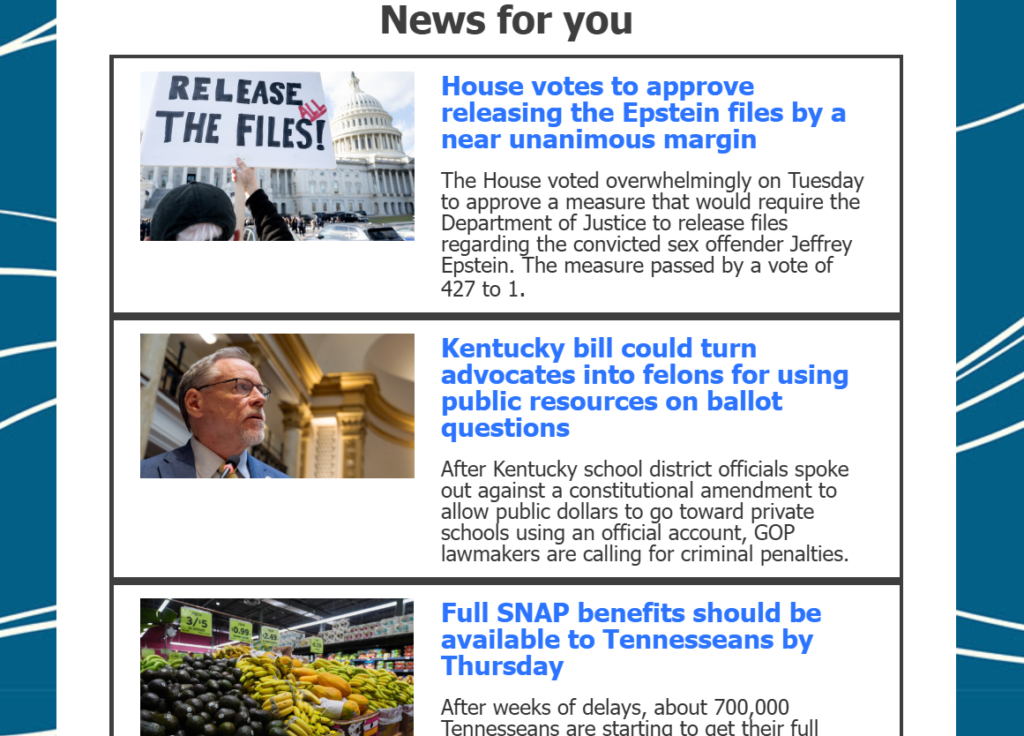
- Cross-post news stories with thumbnail images on social media and in station e-newsletter.
- Add directive liners to broadcast breaks and newscasts, “Find this story and more at wkms.org.
- Pitch WKMS news stories to NPR; posts of WKMS stories on NPR social media lead to a ton of page views.
OBJECTIVE: Increase number of live-streaming sessions by 10%
TACTICS:
- Utilize trades for print ads (with QR code) to let listeners know they can listen live, on the go.
- On-air promos that discuss live-streaming, “Stream WKMS anytime at wkms.org.“
- Graphics that promote live-streaming at in-person events, on social media.
OBJECTIVE: Increase number of on-demand streaming sessions by 10%
TACTICS:
- Graphics (with QR code) promoting on-demand listening in print ads and in-person events.
- On-air promos that discuss on-demand: “Listen to episodes of your favorite local music programs, anytime at wkms.org/ondemand.“
- Promote specific episodes of on-demand programs on social media & in e-newsletter.

Goal #2: WKMS App
Increase the number of downloads and overall use of the new WKMS app.
OBJECTIVE: Increase number of unique app users to 500
TACTICS:
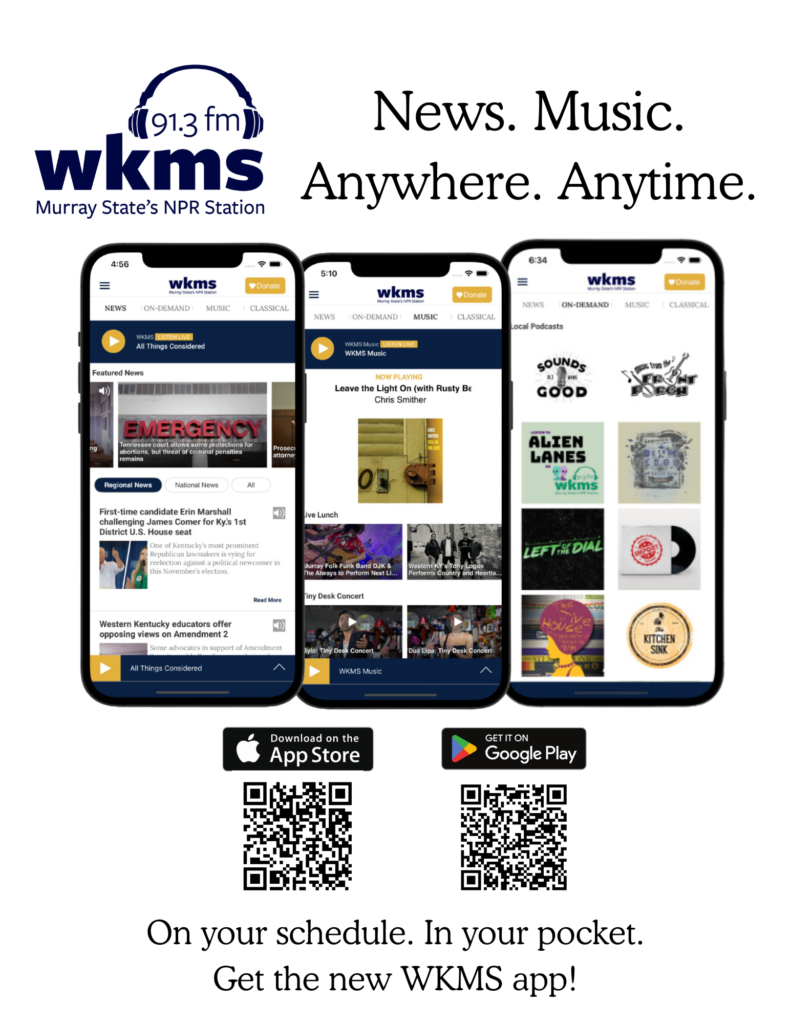
- Graphics that promote the app, offer WKMS giveaways for those that download the app at in-person events (with QR codes for Apple & Google app stores).
- Utilize trades for print ads to promote the app and its functions.
- Social media posts with graphics and videos, promoting the app, its functions, and where to find it
OBJECTIVE: Reach 500 total in-app live-streaming sessions
TACTICS:
- Broadcast promos informing listeners about the app as an alternative or additional way to listen live to WKMS news and music.
- Directive scripts promoting the app, read live by hosts on-air in newscasts, station identification, and other broadcast breaks: “Hear this story and more on the WKMS app.”
- Posts on Facebook and Instagram that inform our followers the app is a listening option when outside of our terrestrial coverage area.
OBJECTIVE: Reach 500 total in-app on-demand streaming sessions
TACTICS:
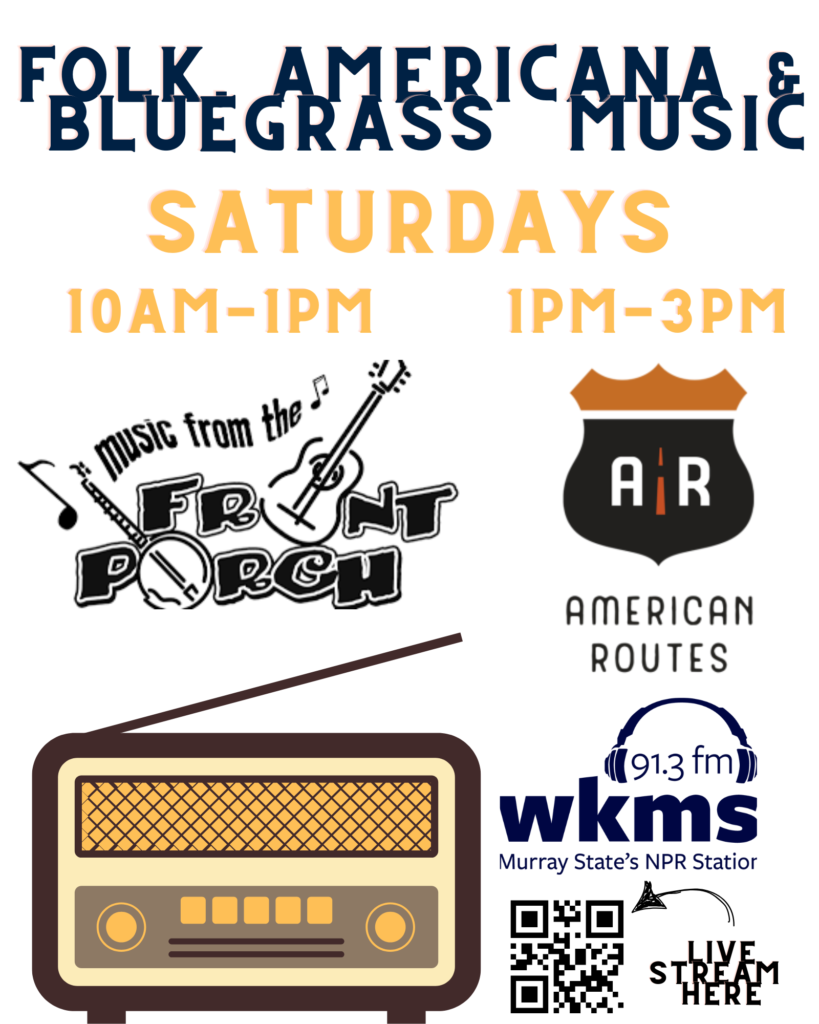
- Broadcast promos informing listeners about the app as a way to catch episodes of their favorite locally-produced music programs.
- Directive on-air scripts promoting on-demand listening on the app, read live by local hosts at the end of their program: “Hear this episode again on the WKMS app.”
- Promote specific on-demand music programs, and episodes of those programs, on Facebook and Instagram with graphics.
Goal #3: Social Media
Reach new audiences and grow the overall engagement of our social media.
OBJECTIVE: Grow the number of WKMS followers on Facebook and Instagram by 10%
TACTICS:
- Directive scripts, read live by hosts during broadcast breaks: “Follow WKMS on Facebook and Instagram.”
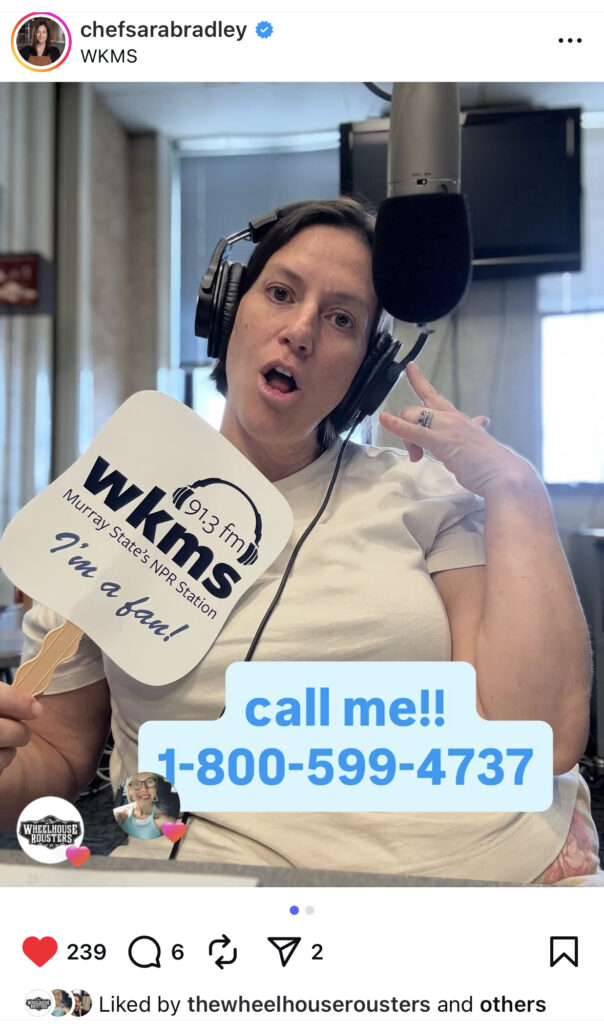
- Utilize listener-influencers on social media to post original content centered on WKMS, including why and how they listen, what makes them donate to the station, what programs they prefer, and more.
- Encourage listeners, donors, and followers to share WKMS content on their own feeds using in-post calls-to-action: “Share this story!”
OBJECTIVE: Increase the number of visits/ interactions on Facebook and Instagram by 10%
TACTICS:
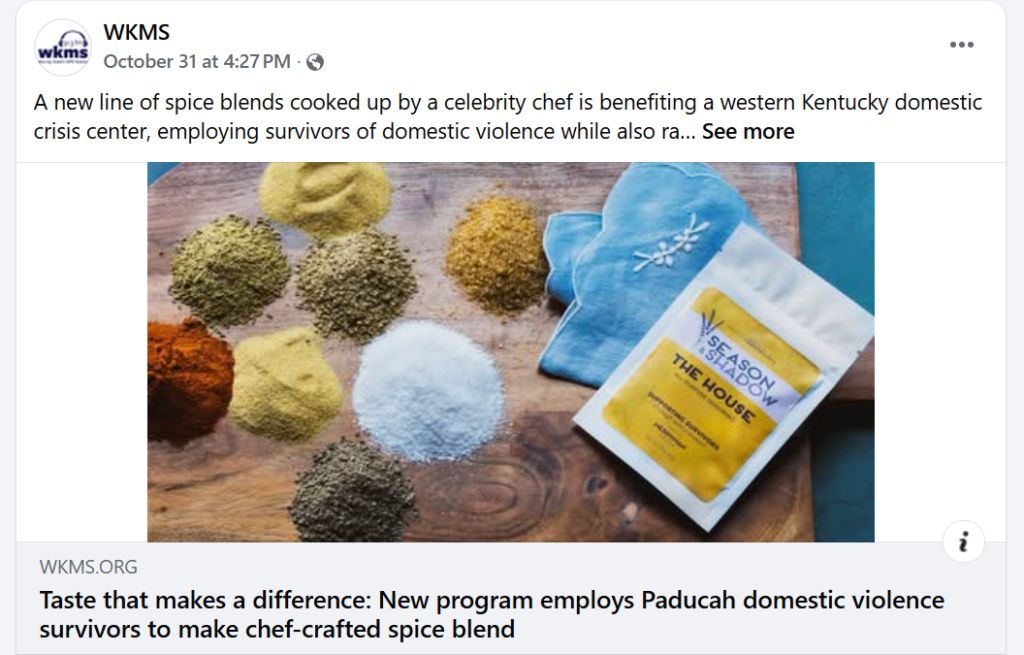
- Maintain a schedule of consistent posts on both platforms with a mix of content: news stories, photos from station events, graphics promoting WKMS digital options, links to on-demand content, specific show promotions, and NPR-provided graphics.
- Schedule posts at set times throughout the day, allowing for two- three hours between posts, using the following schedule: Weekdays: 6 posts between 8a-8p
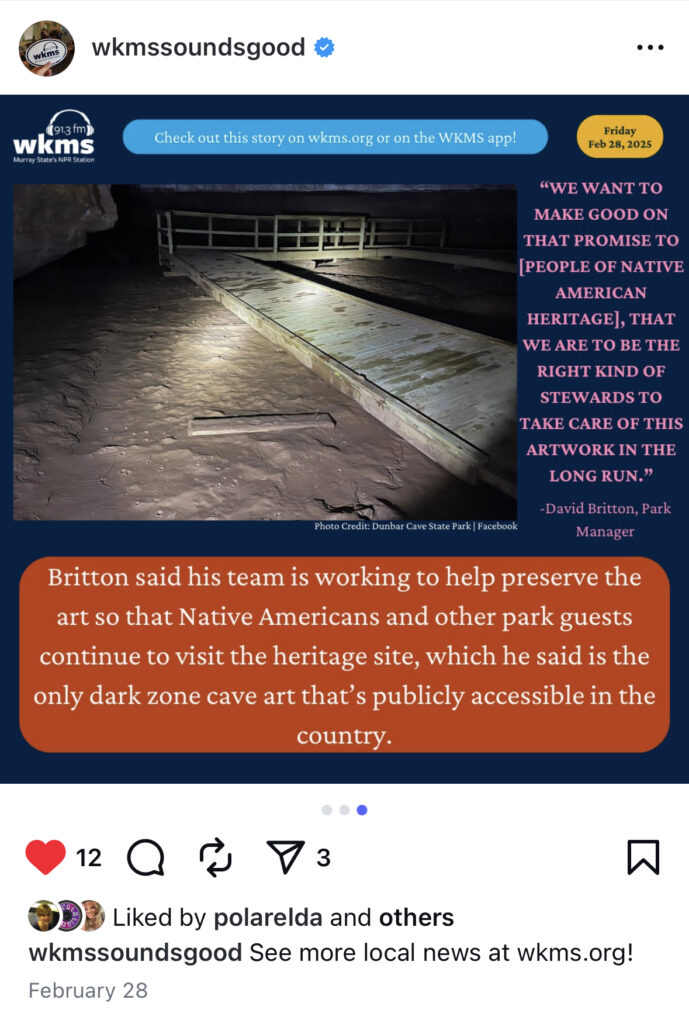
Weekends: 4 posts between 10a-6p - Incorporate “swipe stories” on Instagram – in-house designed graphics that contain photos, direct quotes, and snippets of news stories in sequential order – requiring viewers to engage with the post to see more of the story.
OBJECTIVE: Grow the number of link clicks on Facebook by 10%
TACTICS:
- Post NPR national news stories that coordinate with what has aired in the most popular news programs, Morning Edition and All Things Considered, and are therefore recognizable by listener-followers.
- Prioritize breaking news stories from the NPR and WKMS news rooms, post as needed, outside of the daily posting schedule.
- Include compelling stories from the WKMS newsroom with thumbnail images that open the link in a new window when clicked.
How Did It Turn Out?
WKMS exceeded every objective!
- Website users grew by 14%, with direct traffic up over 82%. Live-streaming grew by 10% and on-demand listening grew an outstanding 1800%.
- App downloads increased steadily, reaching 655 unique users. Live-streaming via the app far exceeded the objective, with over 77,000 streaming sessions. And on-demand sessions reached 970 total.
- Social media followers on Facebook grew over 55%, and over 228% on Instagram. Interactions on Facebook were up 136%, and 100% on Instagram. Link clicks on Facebook grew by 34%.
It’s important to note here that the extra media attention from federal funding cuts likely had a big impact on these increases, especially the website and social media. However, looking at metrics before the July congressional vote, the station was already seeing increases in performance.
What Will WKMS Do Next?
WKMS plans to incorporate more short videos to its social media mix, expanding its YouTube channel. The station will also focus on Instagram reels, taking part in an interstation collaboration through the Appalachian Mid-South Newsroom (AMSN), a NPR hub of seven stations from Kentucky, Tennessee, and West Virginia sharing news content. The AMSN is launching a video journalism project utilizing students at Western Kentucky University – where member station WKYU is based – for production. Working with college students is a way that small stations can increase digital content amidst strapped funding, especially those that are university-licensed.
Digital Growth: Within Reach for Every Station
Public radio is at a pivotal point. Traditional radio listenership is declining as more people prefer to consume content on digital devices and platforms. And stations are now operating without federal funding from the Corporation for Public Broadcasting. This project shows that with a plan and some collaboration, stations of any size can grow audience size and engagement on their digital platforms, and subsequently find new revenue sources.
Contributors to this blog post

Author